
Roman Urdu ki Azaadi
Why I write Urdu in Latin letters, what it costs, and what it quietly gives back.
Someone asked me last month why I do not write in the Nastaliq script. It was not an accusation, but it landed like one. Urdu in Roman letters is, to a certain kind of reader, a compromise — a language wearing borrowed clothes.
I have thought about it since. Here is the honest answer: I write in Roman Urdu because it is the script my thoughts arrive in. Not the script they deserve, perhaps. But the one they show up wearing.
The argument against
The strongest objection is not aesthetic, it is acoustic. Nastaliq encodes sounds that Latin letters flatten. The difference between "qalb" and "kalb" — heart and dog — is a single consonant that Roman transliteration keeps mangling. Poetry lives in exactly that gap.
A script is not a container for a language. It is part of the language.
a friend, over chai, winning the argument
She was right. I lost that conversation and I have not fully recovered from it. But losing an argument is not the same as changing your practice, and I want to explain the gap between the two.
The argument for
Roman Urdu is the largest Urdu-reading population that has ever existed. It lives in text messages, in song comments, in the captions under photographs of other peoples weddings. It is not a degraded form of the language. It is where the language currently is.

When I post a sher in Roman letters, my cousin in Hyderabad reads it, and so does a stranger in Toronto who never learned the script but grew up hearing the sounds. Neither of them would have read it in Nastaliq. That is not a small thing. That is the entire point of writing something down.
There is also something freeing about a script with no prestige attached to it. Nobody grades your Roman Urdu. Nobody tells you your alif is lazy. You are left alone with the only question that matters, which is whether the line is any good.
What I have settled on
I write the first draft in Roman, always. It is the fastest path from the thought to the page, and speed matters more than dignity at that stage. Then I read it aloud, which is the only real test — the ear catches what the eye forgives.
Lafz jis shakl mein aaye, aane do —shakl badalna baad ka kaam hai.
And sometimes, when a poem insists, I write it out by hand in the proper script and photograph it. Those live in the gallery. They are the ones that earned it.
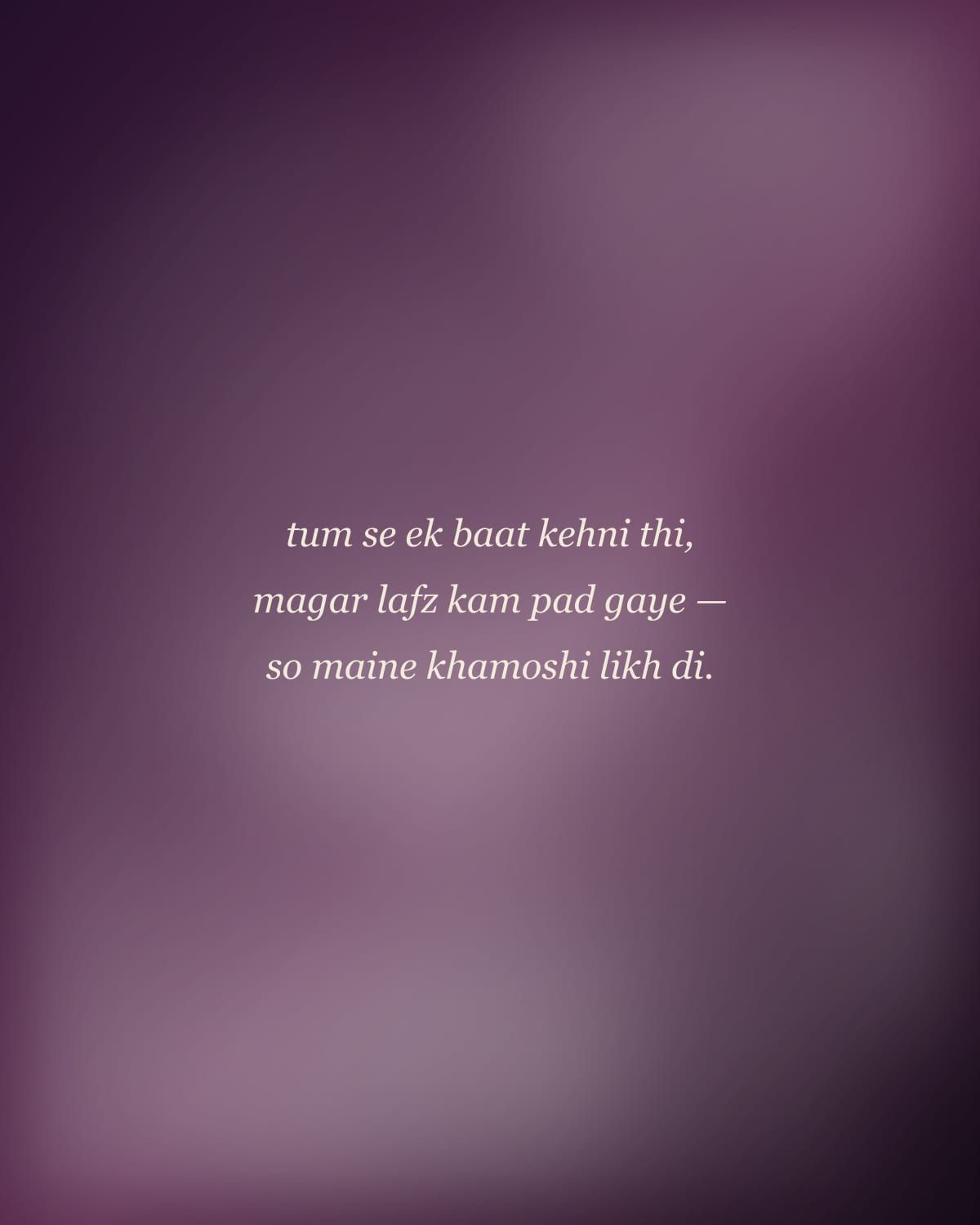
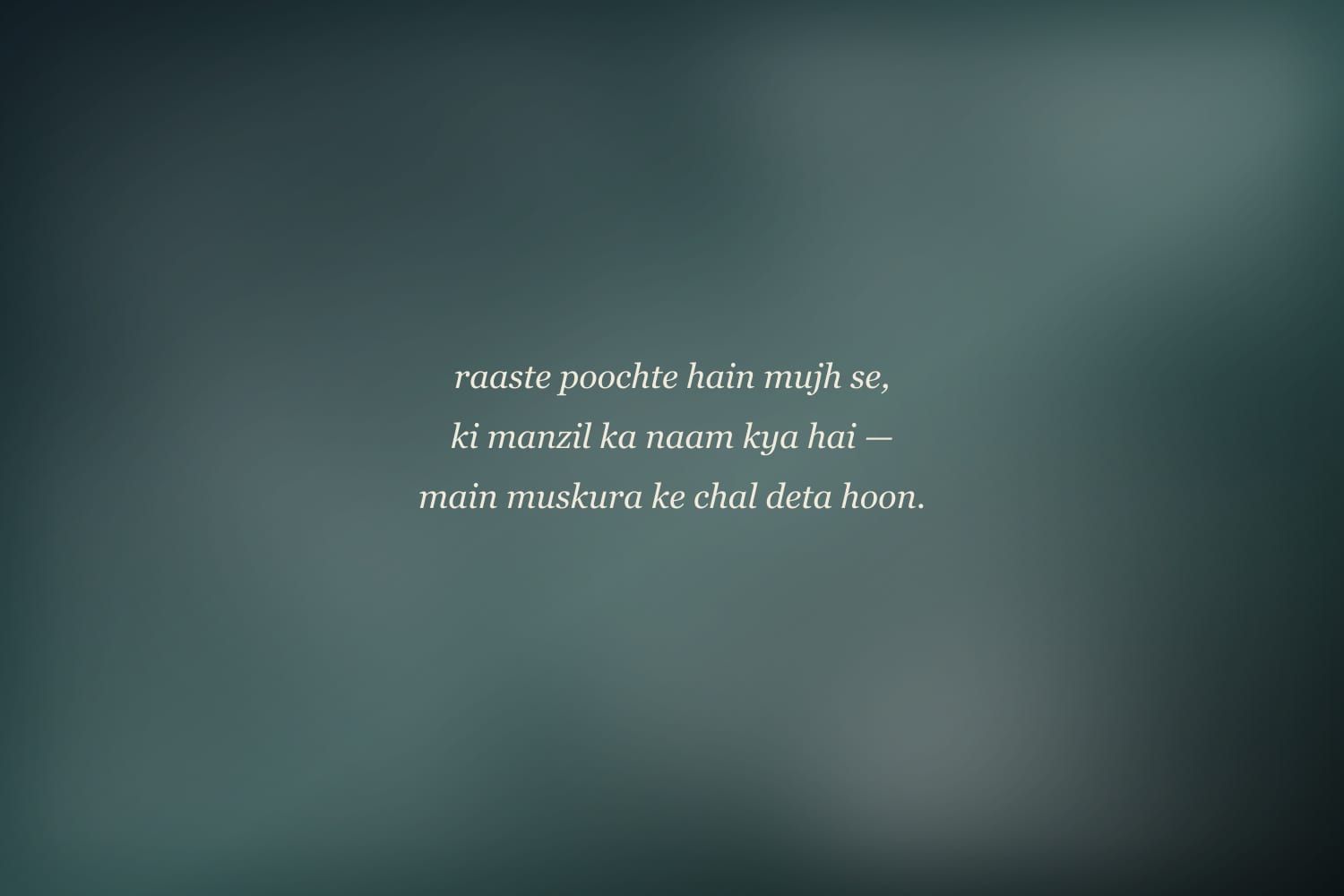
So: a compromise, yes. But a compromise between writing something imperfectly and not writing it at all. I know which of those I would regret.